Archives
-
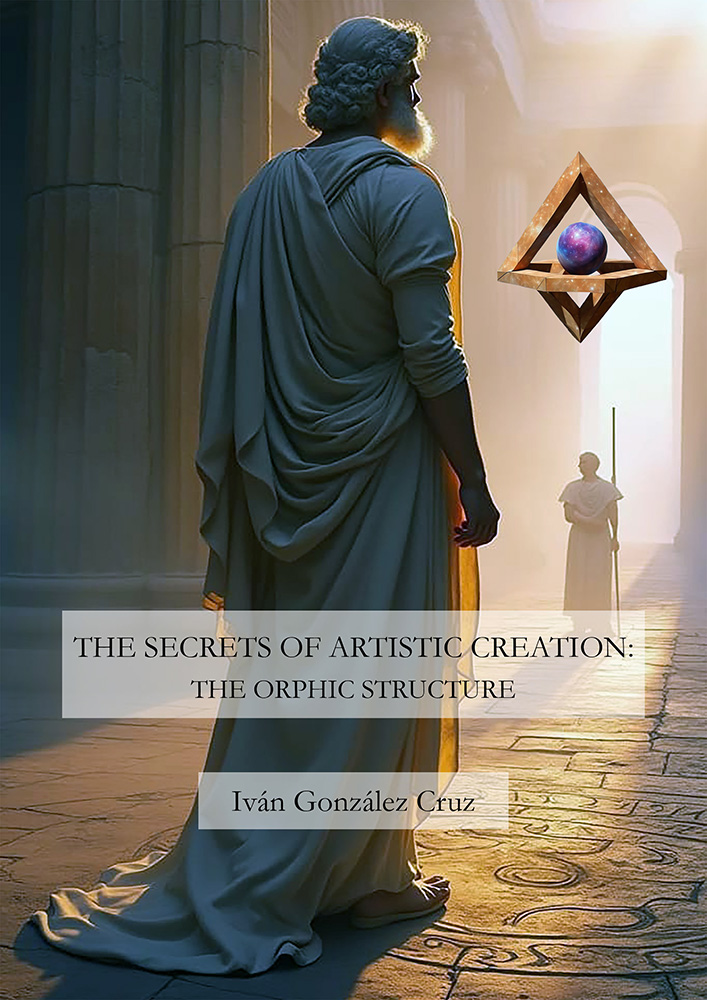
The secrets of artistic creation: The orphic structure
2025This book has several recipients: art students, natural scientists, humanities professionals who have devoted themselves to creativity, and specialists in the broad field of culture. On these pages, you will find an updated look at the origins of creative thought, underlying art as a science or science as an aesthetic act. The approaches discussed in this essay will serve as a starting point for implementing various strategies: to provide an artist-writer with the tools to develop his creations and a researcher with a method of analysis when studying his works. Students will be able to receive my interpretation of the theses presented in the classroom, a theory that encourages practical experiments in the formation of creative abilities.
-
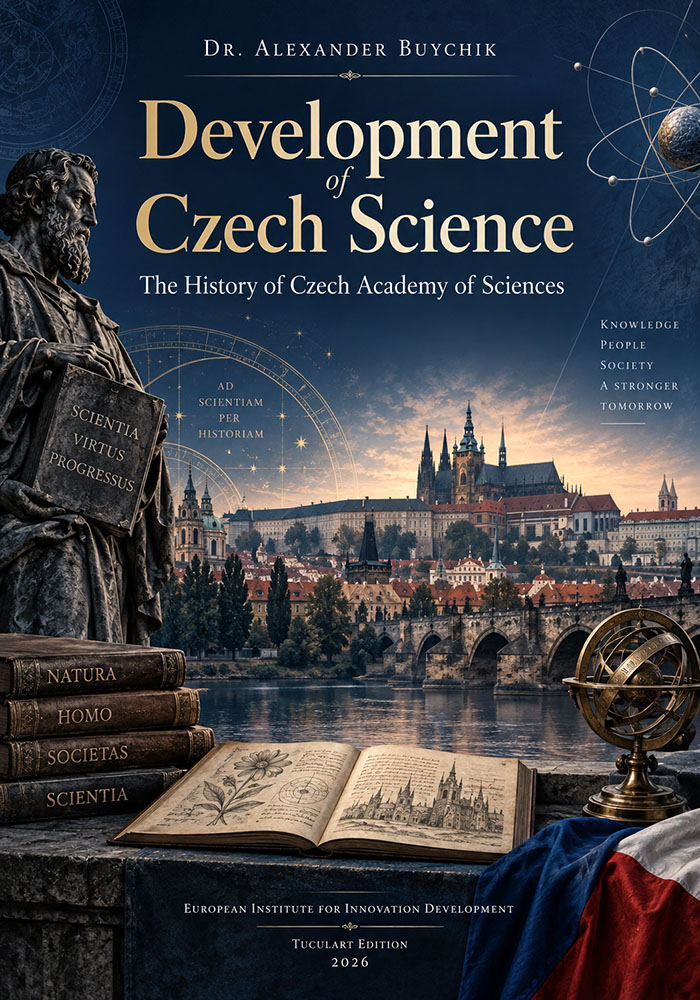
Development of Czech Science: The History of Czech Academy of Sciences
2026Development of Czech Science: The History of Czech Academy of Sciences is a comprehensive historical and institutional study of the development of Czech academic science and the changing role of the Academy as one of the country’s principal institutions of research, knowledge, and scientific memory. The book traces the evolution of organised scholarship in the Czech lands from early learned societies and the Royal Czech Society of Sciences through the Czech Academy of Sciences and Arts and the Czechoslovak Academy of Sciences to the establishment and development of the modern Czech Academy of Sciences.
Particular attention is given to the relationship between scientific development and political transformation, including the formation of national scientific institutions, the socialist reorganisation of research after 1952, the effects of ideological control and political repression, the transformation of the Academy after 1989, and its institutional renewal following the establishment of the Czech Republic in 1993. The study examines both continuity and rupture, showing how research institutes, scientific schools, professional communities, archives, infrastructures, and intellectual traditions were preserved, transformed, or redefined across different political regimes.
The book also explores the structure and governance of the contemporary Academy, the modernisation of research evaluation, European and international integration, open science, digitalisation, scientific careers, and the development of interdisciplinary and public-interest research. It considers major achievements in the natural sciences, mathematics, physics, chemistry, life sciences, biomedicine, humanities, and social sciences, while also addressing innovation, technology transfer, research infrastructures, and cooperation with universities, government, industry, and society. Extending its analysis to 2025, the book places the Czech Academy of Sciences within the broader history of European academic institutions and interprets it as a long-term carrier of scientific knowledge, institutional memory, cultural heritage, and national intellectual capacity. It presents the Academy not only as a research organisation, but also as an institution connecting historical inheritance with contemporary scientific excellence, innovation, public responsibility, and the strategic development of Czech science in the twenty-first century. -
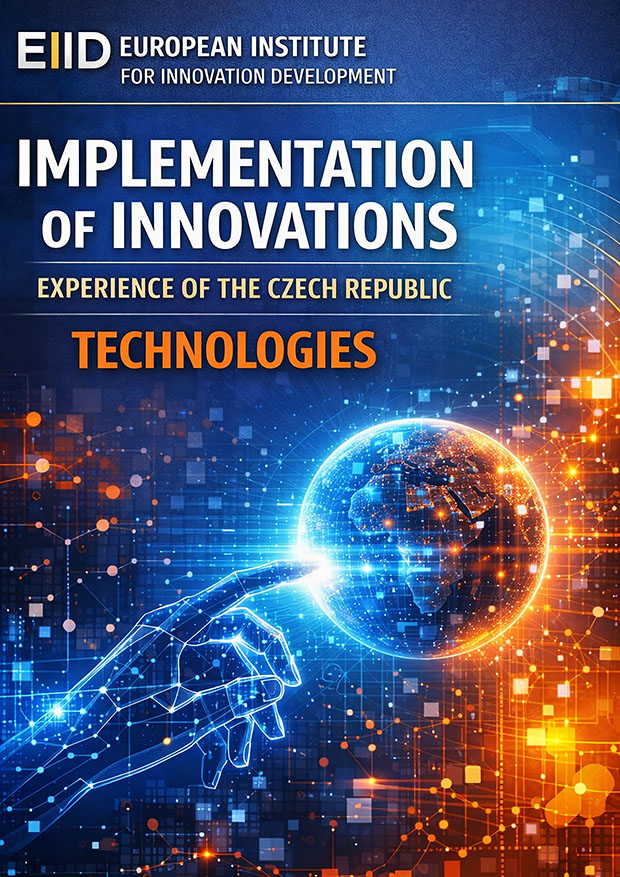
Implementation of Innovations in Technologies: Experience of the Czech Republic
2026The book offers a clear and engaging account of how technical science and technological development in Czechia evolved from the post-Czechoslovak transition of 1993 to the mature, infrastructure-rich, and internationally integrated system of 2025. It traces the major stages of this transformation, from institutional reorganisation and post-socialist adaptation to European integration, strategic specialisation, digital modernisation, and the consolidation of advanced research infrastructures. The book shows how Czechia built a distinctive technological model grounded in strong technical universities, public research organisations, industrial R&D, and close links between science and production. Particular attention is given to the leading branches of contemporary Czech technological development, including electron microscopy and scientific instrumentation, high-performance computing, artificial intelligence and robotics, cybersecurity and network technologies, automotive engineering and Industry 4.0, transport engineering, and other high-technology sectors. The edition also highlights the contribution of leading Czech researchers, engineers, and innovators whose work shaped the modern profile of these fields. Written in a concise but analytically rich style, the book combines historical overview, institutional analysis, technological mapping, and the study of key scientific and engineering achievements. It is especially valuable for interns, students, researchers, policy specialists, and professionals seeking a reliable introduction to the scientific and technological development of contemporary Czechia. Readers will find here not only a history of national technical progress, but also a model of how a medium-sized European state can build technological competitiveness through engineering depth, research infrastructure, and strategic integration into international scientific networks. This volume forms part of the wider series Implementation of Innovations: Experience of the Czech Republic, presenting Czech achievements across key branches of science and industry.
-
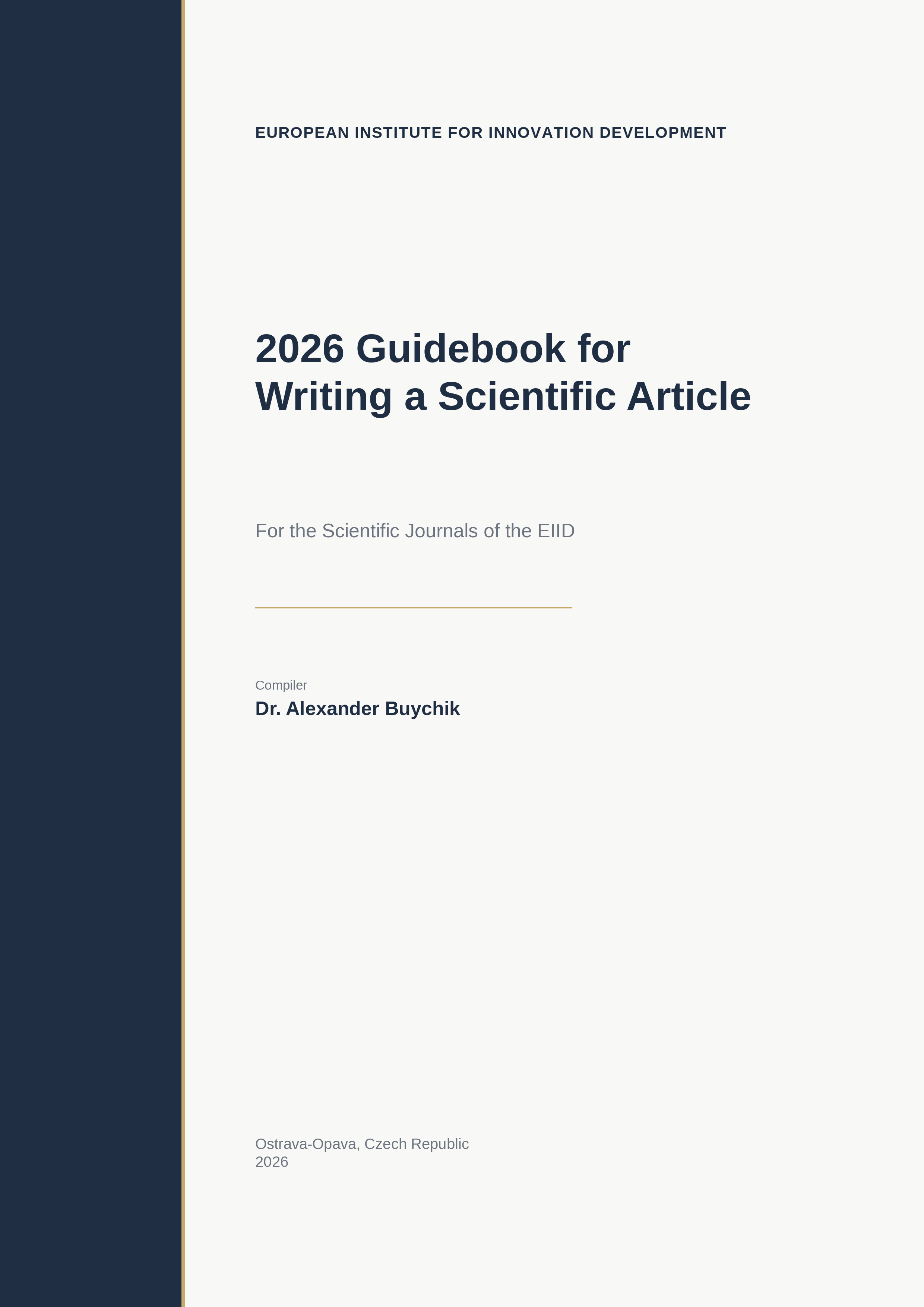
2026 Guidebook for Writing a Scientific Article
20262026 Guidebook for Writing a Scientific Article is a practical and professionally structured handbook designed to help authors prepare stronger, clearer, and more publishable manuscripts for the EIID scientific journals European Scientific e-Journal and Klironomy. Compiled by Dr. Alexander Buychik and published by Tuculart Edition in cooperation with the European Institute for Innovation Development, this edition offers a full methodological pathway from the initial choice of topic to the final pre-submission check of the article. It is intended for scholars, researchers, university lecturers, doctoral candidates, and independent authors who wish to align their work with contemporary international publication standards. The guidebook gives particular attention to IMRaD structure, APA referencing, academic integrity, text originality, abstract writing, author metadata, and the overall editorial culture of a high-quality research article. It also provides practical guidance on research methodology, literature review construction, the presentation of results, discussion and conclusions, as well as the correct use of tables, figures, appendices, and additional transparency sections such as Conflict of Interest, Funding, Ethics, Data Availability, and Code Availability. Especially valuable is its combination of academic rigour and procedural clarity: the book does not merely describe formal requirements, but translates them into a workable system for real manuscript preparation. The publication is particularly relevant for authors in the humanities and social sciences, while remaining fully useful for interdisciplinary researchers seeking a disciplined and internationally intelligible model of scholarly writing. It is, in essence, both a methodological guide and an editorial roadmap for anyone who wants to move from a promising idea to a submission-ready article. For authors aiming to reduce revision time, improve argumentation, and strengthen the professional presentation of their research, this guidebook offers a reliable and timely resource. -

Diccionario. Vida y obra de José Lezama Lima (Segunda parte)
2025Dictionary. Life and Work of José Lezama Lima (Part Two) is a monumental scholarly achievement that completes a comprehensive lexicographic and hermeneutic exploration of one of the most complex and influential figures of twentieth-century Hispanic literature. Conceived as the culmination of a long-term research project, this volume offers an encyclopaedic reconstruction of José Lezama Lima’s intellectual universe, uniting biography, poetics, philosophy, and textual analysis within a single systematic framework. Structured as a dictionary of concepts ranging from F to Z, the book goes far beyond a conventional reference work. Each entry traces the genesis, evolution, and semantic transformations of key notions across Lezama Lima’s poetry, essays, novels, correspondence, interviews, and unpublished manuscripts. Through a rigorous synchronic and diachronic methodology, the author reveals the internal coherence of Lezama’s thought, demonstrating how concepts migrate, mutate, and interconnect throughout his oeuvre. This second part introduces and develops themes that are essential to understanding Lezama’s mature poetics, including eros, myth, culinary imagination, bestiaries, metaphysics, cultural memory, and the fusion of poetry and prose. Drawing extensively on archival materials, many edited and studied by the author himself, the book sheds new light on Lezama’s creative process, his system of images, and his unique conception of the word as both poetic event and epistemological tool. At once a biography written through concepts and a conceptual map of a singular literary system, this dictionary serves as an indispensable instrument for scholars, students, and readers seeking to engage deeply with Lezama Lima’s work. It establishes a solid foundation for future critical editions and positions Lezama not only as a central figure of Cuban literature, but as a universal thinker whose vision transcends genres, epochs, and cultural boundaries.
-
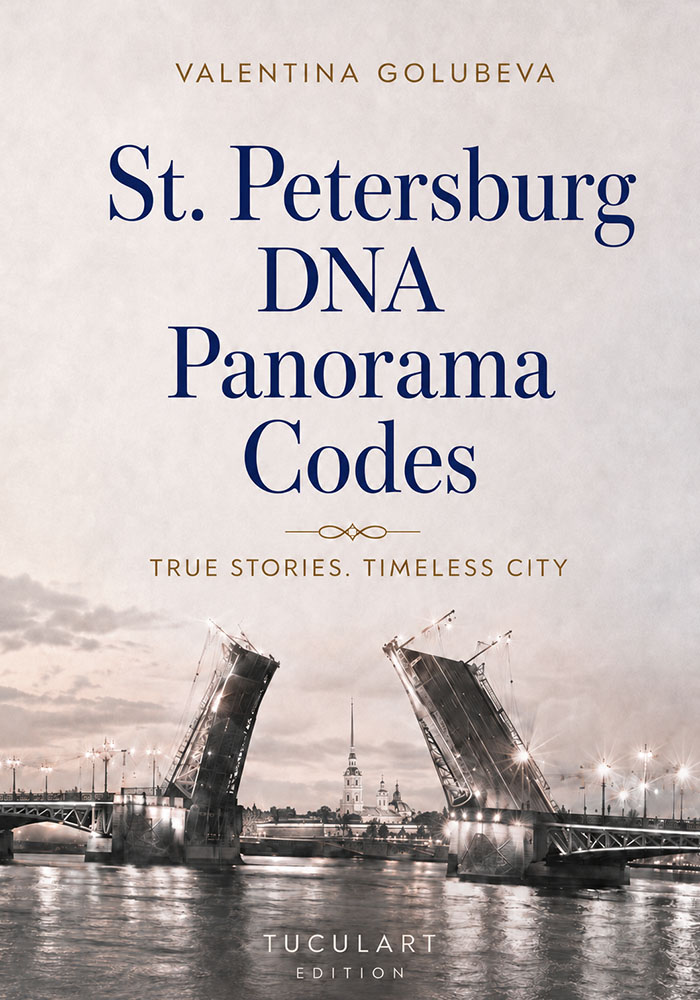
St Petersburg DNA Panorama Codes
2026This book explores St Petersburg as more than a historical city or architectural masterpiece: it presents the city as a living system of cultural, psychological, and visual codes capable of influencing the way people perceive themselves, their relationships, their work, and their future. Across twelve interconnected chapters, Valentina Golubeva combines narrative episodes, personal reflection, business cases, and symbolic interpretations of St Petersburg’s bridges, embankments, streets, monuments, and cultural landmarks. The city becomes both the setting and an active participant in stories of personal transformation, professional growth, love, identity, and the search for new possibilities.
A central theme of the book is the idea that a change in perspective can lead to a change in life. Through the stories of entrepreneurs, professionals, couples, and individuals facing moments of uncertainty, the author examines inner limitations, digital reputation, business scaling, relationships, masculine and feminine identity, cultural inheritance, and the distinctive “DNA” of the Petersburger. The project The Petersburger’s Emporium serves as a recurring connecting space in which photography and visual perception become instruments for recognising new meanings and discovering new ways of thinking. St Petersburg is therefore interpreted not simply as scenery, but as a source of metaphors, associations, inspiration, and personal insight.
By bringing together the cultural heritage of St Petersburg with contemporary questions of self-development, entrepreneurship, communication, visual literacy, and human relationships, the book offers an unconventional portrait of the city and the people connected with it. It invites readers to look beyond familiar urban images and to discover how architecture, history, beauty, memory, and individual experience can become catalysts for new decisions and new life trajectories. The book is intended for readers interested in St Petersburg, personal development, cultural identity, entrepreneurship, creative thinking, visual culture, and the relationship between place and human destiny. -
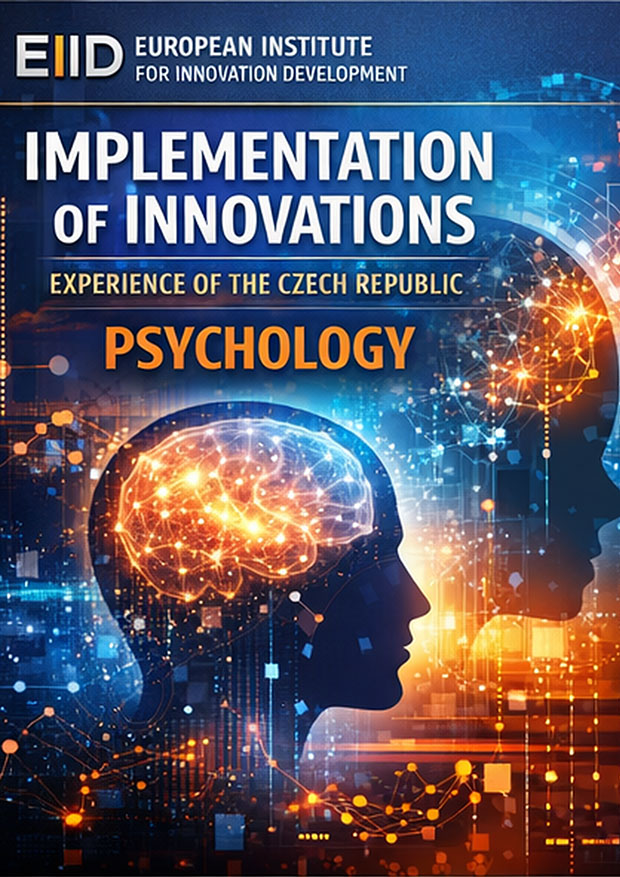
Implementation of Innovations in Psychology: Experience of the Czech Republic
2026The book offers a clear and engaging account of how psychological science in Czechia developed from the post-Czechoslovak transition of 1993 to the mature and internationally connected discipline of 2025. The book traces the major stages of this transformation, from institutional reorganisation and academic consolidation to internationalisation, digital modernisation, and growing public relevance. It shows how Czech psychology built strong research centres, developed influential scholarly schools, and integrated itself into the wider European scientific space without losing its national specificity. Particular attention is given to the leading directions of contemporary Czech psychology, including personality psychology, cognitive psychology, psychometrics, health psychology, cyberpsychology, school psychology, and the psychology of social resilience. The edition also highlights the contribution of prominent Czech researchers whose work shaped the modern profile of the discipline. Written in a concise but analytically rich style, the book combines historical overview, institutional analysis, and intellectual mapping of the field. It is especially valuable for interns, students, researchers, and professionals seeking a reliable introduction to the scientific and practical development of psychology in Czechia. Readers will find not only a history of a national discipline, but also a model of how psychological science can evolve under conditions of social transformation, European integration, and technological change. This volume forms part of the wider series Implementation of Innovations: Experience of the Czech Republic, presenting Czech achievements across key branches of science and industry.
-
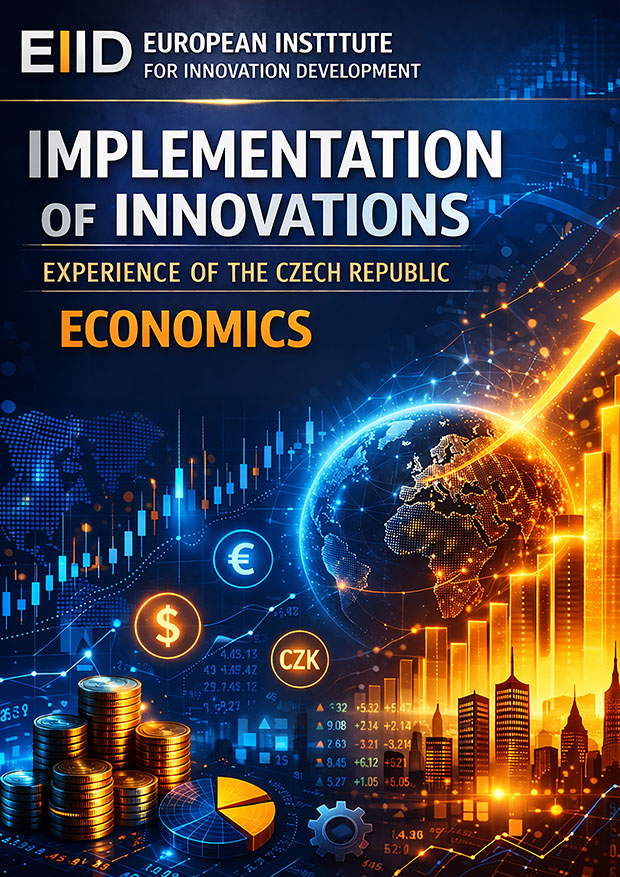
Implementation of Innovations in Economics: Experience of the Czech Republic
2026This book offers a clear and analytically rich account of how economic thought in Czechia developed from the post-Czechoslovak transition of 1993 to the mature and internationally connected discipline of 2025. It traces the major stages of this transformation, from institutional reconstruction and market reform to methodological modernisation, global academic integration, and the emergence of strong specialised research schools. Particular attention is given to the leading directions of contemporary Czech economics, including transformation and institutional economics, labour economics, education economics, behavioural and experimental economics, public finance, taxation, macroeconomics, and innovation studies. The edition also highlights the contribution of prominent Czech economists whose work shaped both national policy thinking and international scholarly debates. Rather than presenting economics as an abstract body of theory, the book shows how Czech researchers responded to real historical challenges such as privatisation, monetary stabilisation, labour-market change, fiscal reform, and the pressures of European integration. It demonstrates how Czech economic science gradually moved beyond the initial problems of transition and became a fully developed field with its own schools, institutions, and research traditions. Written in a concise but academically grounded style, the book combines intellectual history, institutional analysis, and the mapping of key scholarly figures. It will be especially valuable for researchers, lecturers, students, policy professionals, and all readers interested in the development of modern social sciences in Central Europe. As a whole, the publication presents Czech economics not merely as a national case, but as a dynamic and meaningful part of contemporary European economic thought.
-
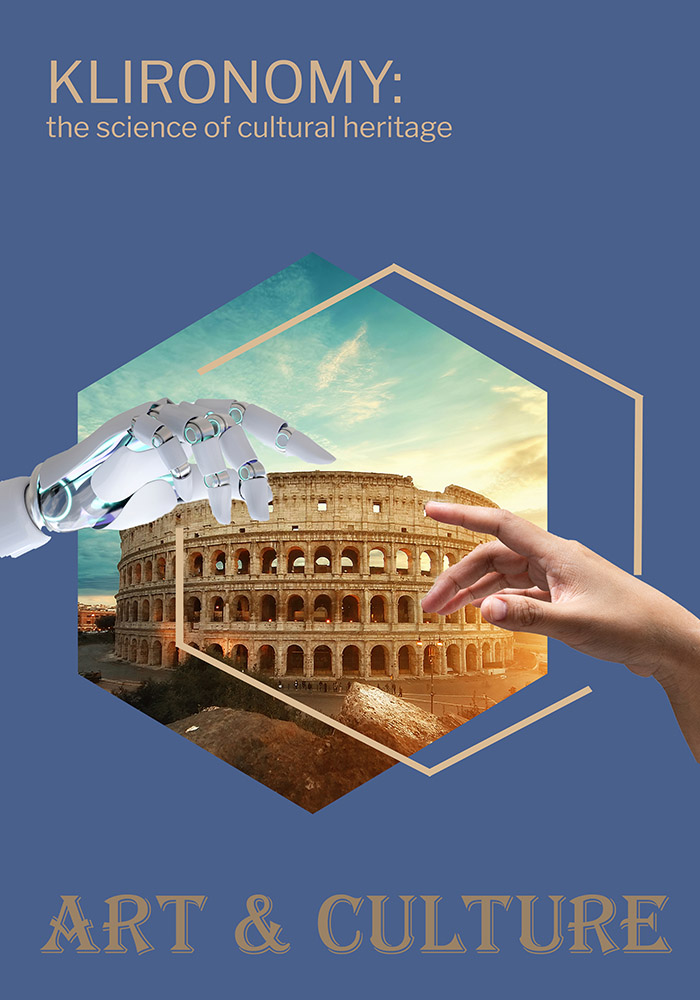
Klironomy: The Science of Cultural Heritage
2024The book includes a revised and expanded first edition of the monograph on a new scientific direction on cultural heritage. The work describes the relevance of creating a complex of Sciences of Klironomy, the history of forming the world cultural heritage, the types of its preservation, and a complete description of the methodological apparatus of all klironomical sciences, combined into three logical directions – tangible, intangible and theoretical. In conclusion, the author presents the passport of the specialty developed him. The references list 32 scientific works of the author and developer of cultural heritage science for 2012-2023, such as 318 scientific works, researches, scientific articles and information sources.
-
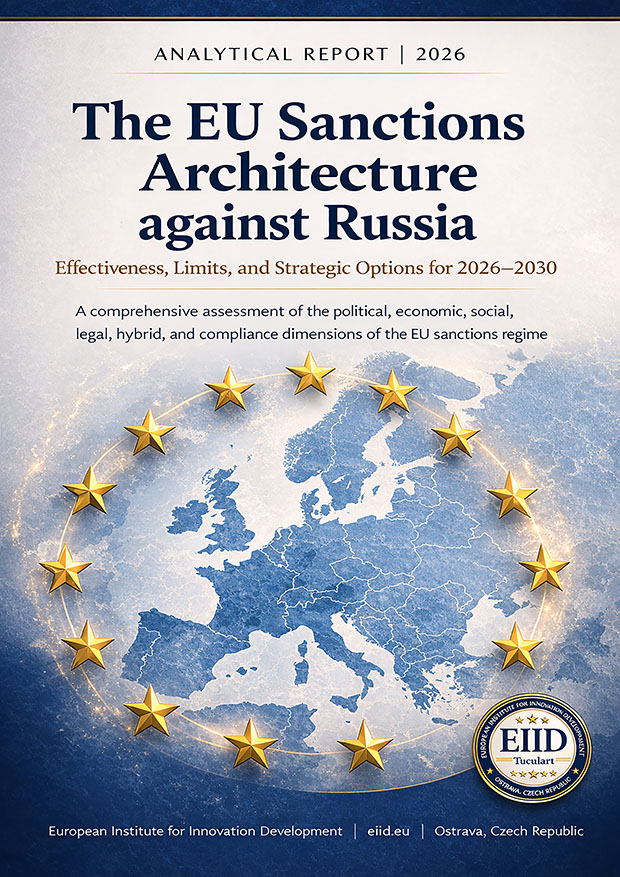
The EU Sanctions Architecture against Russia: Effectiveness, Limits, and Strategic Options for 2026–2030
2026The EU Sanctions Architecture against Russia: Effectiveness, Limits, and Strategic Options for 2026–2030 is a comprehensive analytical report examining the European Union’s sanctions regime against Russia as a complex and evolving system of political, economic, social, legal, hybrid, and compliance measures. The publication moves beyond simplified claims about whether sanctions “work” or “do not work” and instead offers a multidimensional assessment of their real strategic effects, operational limits, and long-term policy value. Particular attention is given to the interaction between sanctions design, enforcement quality, anti-circumvention mechanisms, and Russia’s adaptive responses. The report analyses not only the immediate consequences of restrictive measures, but also their cumulative impact on state capacity, technological access, financial resilience, logistics, and international manoeuvrability. It also explores the legal durability and governance quality of the sanctions regime, including its dependence on coordination among EU institutions, Member States, and international partners. A distinctive feature of the edition is its forward-looking perspective, presenting strategic scenarios, evaluative criteria, and policy options for the period 2026–2030. The book will be especially valuable for policymakers, diplomats, researchers, legal experts, compliance professionals, and analytical centres working on European security, sanctions policy, and Russia-related studies.


